
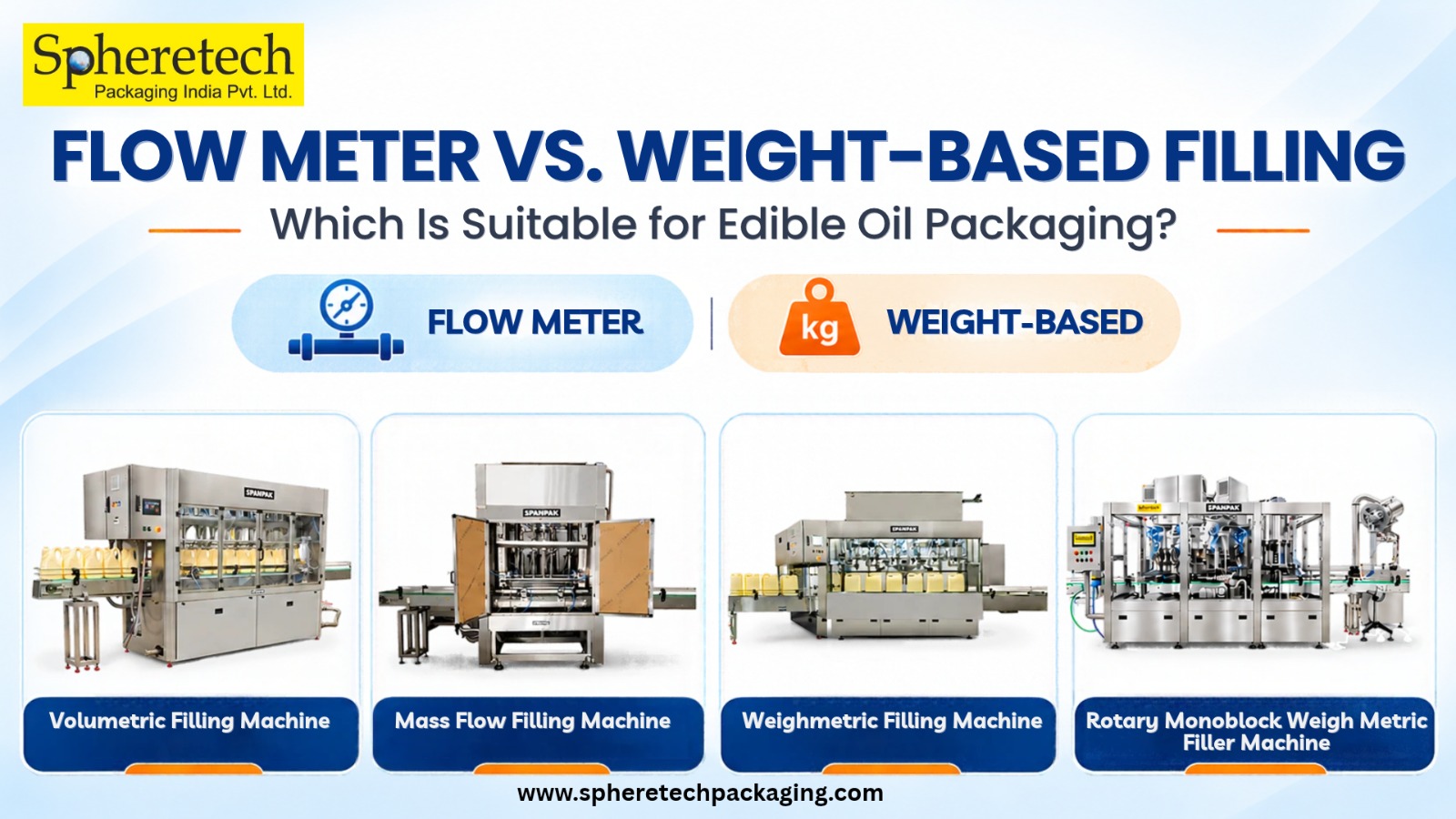
Flow Meter vs. Weight-Based Filling: Which Edible Oil Filling Machine Is Right for You?
Choosing the right edible oil filling machine is important for manufacturers looking to maintain filling accuracy, reduce product wastage and improve production efficiency. Whether you are packaging sunflower oil, soybean oil, palm oil or groundnut oil, you need a reliable oil filling machine that delivers consistent quantities into every bottle or tin. Two widely used technologies in edible oil packaging machines are flow meter-based filling and weight-based filling. Both are designed for controlled dispensing, but they work on different measurement principles. Flow meter systems measure the volume or mass of liquid passing through the filling line, whereas weight-based filling machines measure the actual weight of the product dispensed. Understanding these differences helps you select the right automatic oil filling machine for your packaging requirements.
1. Understanding Flow Meter Filling
Flow meter filling measures the quantity of liquid passing through a measuring device. The system sends signals to the control unit, which regulates the filling process and stops dispensing once the programmed quantity is reached.
There are two important technologies in this category.
Volumetric Filling Machine
A volumetric filling machine measures liquid by volume, such as 500 ml, 1 litre or 5 litres. It suits manufacturers who need predefined filling quantities across different bottle sizes, making it a popular choice as a cooking oil filling machine for retail packs.
Spheretech’s Volufill Volumetric Filling Machine uses proprietary flow meters to deliver controlled filling quantities.
Key features:
– Filling range: 200 ml to 5 litres and 5 litres to 15 litres.
– Approximate filling accuracy: ±0.25%.
– No change parts required within the specified filling ranges.
– Designed for consistent volumetric filling.
Mass Flow Filling Machine
A mass flow filling machine measures the actual mass of liquid passing through the filling line rather than relying on volume measurement. Spheretech’s Mass Flow Filling Machine uses Coriolis flow meter technology to measure mass flow directly. This makes it suitable for applications where direct mass measurement is required.
Key benefit:
It reduces dependence on volume-to-weight conversion and supports controlled mass-based dispensing.
2. Understanding Weight-Based Filling
Weight-based filling, measures the actual weight of the product using a load cell filling machine setup. During filling, the load cells continuously monitor the increasing product weight. Once the programmed target is reached, the system automatically stops dispensing.
Spheretech’s Automatic Weighmetric Filler Machine is designed for larger container applications, including 15 kg oil tin filling.
Key features:
– Filling range: 5 kg to 30 kg and above.
– Approximate filling accuracy: ±0.1%.
– Load cell-based measurement.
– PLC and touchscreen HMI.
– Auto Tare functionality.
– No Container No Fill system.
– Net and gross filling options.
This technology is particularly suitable for manufacturers who need accurate weightbased filling of larger edible oil containers.
3. Flow Meter vs. Weight-Based Filling: What Is the Difference?
The main difference lies in how the quantity of oil is measured. Volumetric filling measures the liquid in litres or millilitres, making it suitable for predefined bottle volumes. Coriolis mass flow filling measures the mass passing through the filling line. Weight-based filling uses load cells to measure the actual product weight in kilograms.
Another important factor is oil density. Different edible oils and temperature conditions can influence the relationship between volume and weight. Weight-based filling directly measures mass, while volumetric filling maintains a predefined volume. Therefore, manufacturers should select the technology according to their product requirements and declared filling quantity.
4. Which Oil Filling Machine Is Suitable for Your Production?
The selection depends on bottle size, filling quantity, production speed and measurement requirements.
Volumetric Filling Machine: Suitable for edible oil packaged in predefined volumes such as 500 ml, 1 litre, 2 litres and 5 litres.
Mass Flow Filling Machine: Suitable for applications requiring direct mass flow measurement and controlled dispensing.
Automatic Weighmetric Filler Machine: Ideal for larger containers where the required filling quantity is specified in kilograms, such as 5 kg, 15 kg and 30 kg.
Rotary Monoblock Weigh Metric Filler Machine: A rotary configuration can support integrated packaging operations. Its suitability for weight-based filling depends on the actual weighing mechanism incorporated into the machine.
5. Why Choose Spheretech Packaging as Your Oil Filling Machine Manufacturer in India?
Spheretech Packaging India Pvt. Ltd. is an oil filling machine manufacturer in India offering industrial filling solutions for different liquid packaging requirements. As an Edible Oil Filling Machine Supplier, Spheretech Packaging provides filling equipment options for manufacturers handling different edible oil container formats and filling quantities.
Its range includes Volufill Volumetric Filling Machines, Mass Flow Filling Machines and Automatic Weighmetric Fillers, supporting different measurement principles and container capacities. Each technology addresses specific production requirements, helping manufacturers select suitable equipment based on filling quantity, product characteristics and packaging format.
Explore Spheretech Packaging to learn more about its bottle filling solutions.
Conclusion
Both flow meter and weight-based filling technologies offer important advantages for edible oil packaging. Volumetric filling suits predefined liquid volumes, Coriolis mass flow filling supports direct mass measurement, and load cell-based filling is ideal for weight-controlled dispensing. The right choice depends on the product, container size, filling quantity and production requirements. With the right edible oil filling machine, manufacturers can improve quantity control, minimise product wastage and maintain consistent packaging operations.